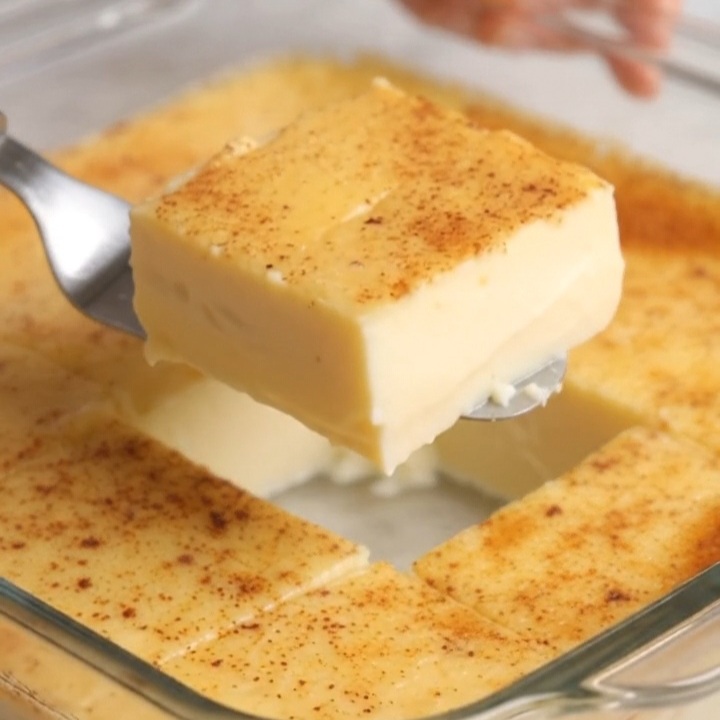
This baked egg custard turns a handful of everyday ingredients into a smooth, lightly sweet dessert with warm vanilla flavor. A sprinkle of nutmeg adds a fragrant finish, while a water bath helps the custard cook gently. It’s simple enough to serve on its own, though a spoonful of whipped cream or fresh fruit makes a lovely addition.
The key is to add the hot milk slowly and take the custard out while it still has a slight jiggle. Serve it warm for a soft, comforting dessert or chilled for a firmer texture. Either way, it’s an easy choice for a family dinner or a quiet weekend treat.
Why You’ll Love This Recipe
- Everyday ingredients: Eggs, milk, sugar, vanilla, and salt form the custard.
- No crust to prepare: The mixture goes straight into the baking dish.
- Gentle vanilla flavor: Nutmeg adds warmth without overpowering the custard.
- Two milk options: Use either 2% or whole milk, as specified.
- Flexible serving temperature: Enjoy it warm or chilled.
- Nine servings: One baking dish makes enough to share.
Equipment
- 8×8-inch oven-safe baking dish, deep enough to hold the custard
- Larger oven-safe baking dish for the water bath
- Large mixing bowl
- Whisk
- Small saucepan
- Measuring cups and spoons
- Kitchen thermometer
- Thin knife for checking doneness
- Oven mitts
Ingredients
Measure everything before heating the milk so you can whisk it into the eggs without interruption.
- 5 large eggs
- ½ cup granulated sugar
- 1½ teaspoons vanilla extract
- ½ teaspoon salt
- 4 cups 2% or whole milk
- Nutmeg, for topping
Optional serving additions: Whipped cream, fruit, or additional spices. Quantities were not specified.
Ingredient Notes & Substitutions
Eggs: The five large eggs give the custard its structure as it bakes. Keep the quantity unchanged; egg substitutes are not established for this recipe.
Granulated sugar: The sugar provides a gentle sweetness that lets the milk and vanilla flavors come through.
Vanilla extract: Vanilla is the main flavoring in the custard. Measure the full 1½ teaspoons for the intended balance.
Salt: Salt balances the sweetness. The recipe calls for ½ teaspoon.
Milk: Both 2% and whole milk are included in the original recipe. Whole milk makes a richer custard. Other milk substitutions have not been specified and may affect the texture.
Nutmeg: Sprinkle it on before baking if desired. You can also leave it off for a plain vanilla custard.
How to Make Baked Egg Custard
- Prepare the oven and dish. Preheat the oven to 350°F (175°C). Lightly grease an 8×8-inch baking dish.
- Mix the eggs and flavorings. In a large bowl, beat together the eggs, granulated sugar, vanilla extract, and salt until well combined.
- Warm the milk. Heat the milk in a small saucepan to about 180°F (82°C), or until it is just about to simmer. Do not let it boil.
- Combine the milk and eggs slowly. Pour the hot milk into the egg mixture in a very thin, steady stream while whisking continuously. Once all the milk is incorporated, continue whisking for 1 additional minute.
- Fill the baking dish. Pour the custard mixture into the prepared dish. Sprinkle the top with nutmeg, if desired.
- Prepare the water bath. Set the custard dish inside the larger baking dish. Carefully add hot water to the outer dish until it reaches about 1 inch up the sides of the custard dish. Avoid splashing water into the custard.
- Bake gently. Carefully transfer the dishes to the oven. Bake for 45–50 minutes, or until a knife inserted near the center comes out clean. The custard should still have a slight jiggle.
- Remove and cool slightly. Carefully remove the custard dish from the water bath and let it cool slightly. Avoid overbaking, which can cause the custard to curdle.
- Serve. Enjoy warm or chilled, with whipped cream, fruit, or additional spices if desired. Refrigerate any leftovers.
Tips for Success
- Check the dish capacity. Use an 8×8-inch dish deep enough to hold the mixture with room below the rim for safe handling.
- Measure the milk temperature. A thermometer makes it easier to reach about 180°F without boiling.
- Pour the milk slowly. Adding it gradually while whisking helps warm the eggs evenly instead of scrambling them.
- Use hot water for the bath. Follow the specified depth of about 1 inch up the custard dish’s sides.
- Check at 45 minutes. Use both the clean-knife test and the slight jiggle to judge doneness.
- Don’t wait for a rigid center. The custard should still move slightly when it comes out of the oven.
- Remove it from the water bath after baking. Leaving it in the hot water continues exposing it to heat.
Variations
These optional finishes keep the original custard mixture unchanged.
- Plain vanilla custard: Omit the nutmeg and serve without toppings.
- Berry-topped custard: Spoon fresh berries over individual portions just before serving.
- Whipped cream finish: Add a small dollop of whipped cream to each portion.
- Extra-spiced topping: Finish with a light dusting of cinnamon or additional nutmeg.
How to Store
Keep leftover custard covered in the refrigerator. Refrigerate it promptly after serving rather than leaving it out to cool for an extended period.
Refrigerator storage duration: [Not provided].
Freezing: A tested freezing and thawing method was not provided for this recipe. Refrigeration is the specified storage method.
If serving with fruit or whipped cream, add those toppings to individual portions just before eating.
Serving Suggestions
- Serve warm as a simple after-dinner dessert.
- Offer chilled portions with fresh berries.
- Add whipped cream and a little nutmeg for a holiday dessert.
- Serve in small dessert bowls with coffee or tea.
The custard is delicate, especially when warm, so spooning it into bowls is an easy way to serve it.
Frequently Asked Questions
Why does baked egg custard need a water bath?
The surrounding water moderates the heat reaching the baking dish, helping the egg mixture cook more gently and evenly.
Why did my custard curdle?
The eggs may have heated too quickly when the milk was added, or the custard may have baked too long. Pour the milk in slowly while whisking, and remove the custard while it still has a slight jiggle.
Can I use 2% milk instead of whole milk?
Yes. Both are specified in the recipe. Whole milk produces a richer result, but the ingredient quantity stays at 4 cups either way.
How do I know when the custard is done?
After 45–50 minutes, a knife inserted near the center should come out clean. The center should still jiggle slightly rather than feel completely firm.
Can I serve it cold?
Yes. The recipe can be served warm or chilled. An exact chilling time was not provided; refrigerate until it reaches your preferred serving temperature.
Is the nutmeg required?
No. Although it appears in the ingredient list, the instructions make the nutmeg topping optional. Leave it off if you prefer the vanilla flavor on its own.
Recipe Card
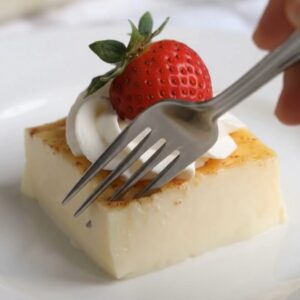
Easy Baked Egg Custard
Equipment
- Deep 8×8-inch oven-safe baking dish
- Larger oven-safe baking dish
- Large mixing bowl
- Whisk
- Small saucepan
- Measuring cups and spoons
- Kitchen thermometer
- Thin knife
- Oven mitts
Ingredients
- 5 large eggs
- ½ cup granulated sugar
- 1½ teaspoons vanilla extract
- ½ teaspoon salt
- 4 cups 2% or whole milk
- Nutmeg for topping
Instructions
- Preheat the oven to 350°F (175°C). Lightly grease an 8×8-inch baking dish.
- Beat the eggs, sugar, vanilla, and salt together in a large bowl.
- Heat the milk in a saucepan to about 180°F (82°C), just before simmering. Do not boil.
- Slowly pour the hot milk into the eggs in a thin stream, whisking continuously. Whisk for 1 additional minute after combining.
- Pour into the prepared dish and sprinkle with nutmeg, if desired.
- Place inside a larger baking dish. Add hot water to the outer dish to reach about 1 inch up the sides of the custard dish.
- Bake for 45–50 minutes, until a knife inserted near the center comes out clean. The custard should still jiggle slightly.
- Remove from the water bath and cool slightly. Do not overbake.
- Serve warm or chilled with optional whipped cream, fruit, or spices. Refrigerate leftovers.