
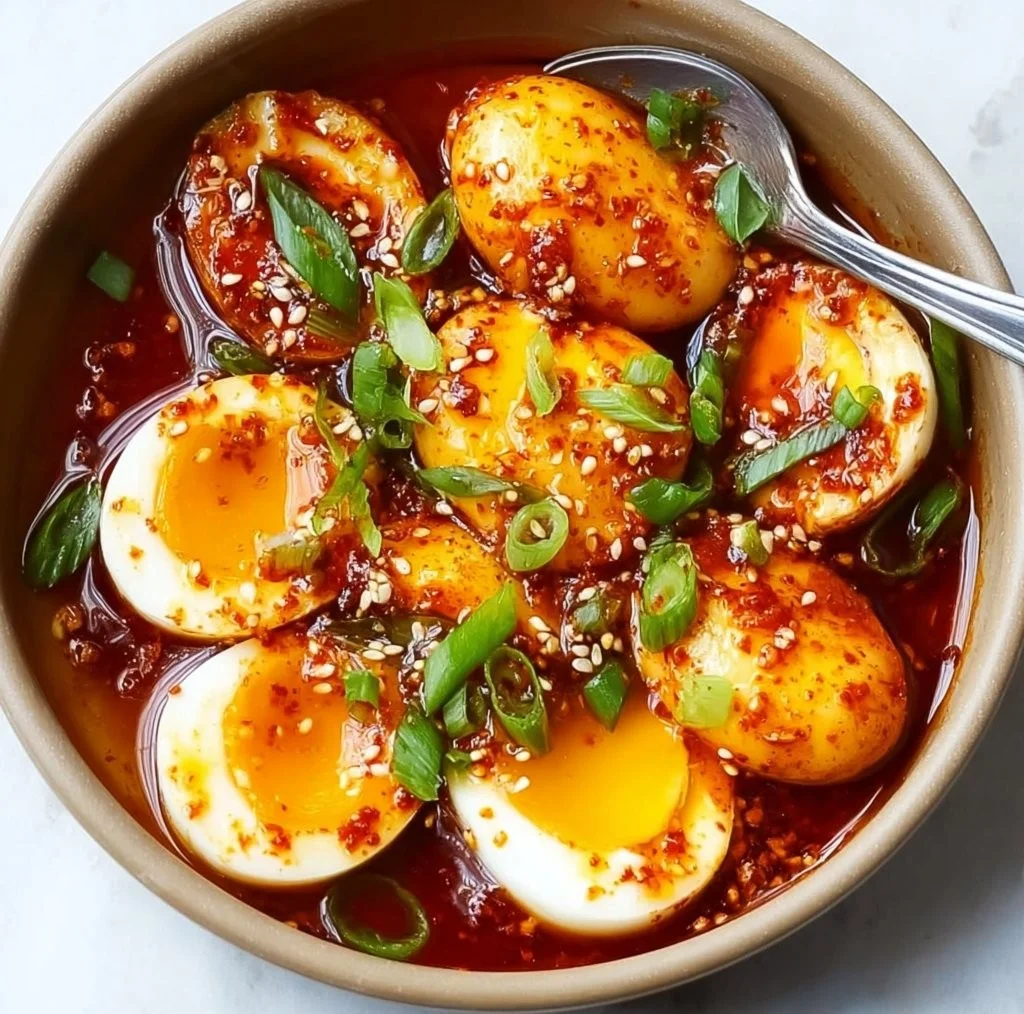
Spicy Gochujang Eggs: Elevate Your Breakfast Game Today

Spicy Gochujang Eggs offer a delightful twist to a traditional breakfast staple, transforming ordinary eggs into an explosion of flavor that you’ll crave any time of day. With the perfect balance of spicy, savory, and tangy notes, these eggs not only elevate your morning routine but also provide a quick and satisfying meal option.
This recipe marries the creamy texture of perfectly boiled eggs with the bold flavors of gochujang—a fermented Korean chili paste, soy sauce, garlic, and a hint of sweetness. The result is a dish that is as adaptable as it is delicious, making it suitable for breakfast, a hearty snack, or even as part of a larger meal. This unique dish draws on the vibrant flavors of Korean cuisine, allowing you to experience a zesty breakfast that will energize your day.
Why make this recipe
Making Spicy Gochujang Eggs is not only simple but brings a burst of excitement to your breakfast table. This recipe is particularly ideal for those who are looking to explore international flavors without spending hours in the kitchen. Packed with protein, these eggs can keep you full and satisfied until your next meal. The way gochujang complements eggs makes it a beloved combination among spicy food lovers. It’s perfect if you enjoy adding a hint of heat to your meals, or if you’re looking for a nutritious and filling breakfast option that doesn’t sacrifice on flavor.
By incorporating ingredients that are typically found in Asian cuisine, especially Korean, you can turn a simple dish into an adventurous culinary experience. Plus, the recipe allows for flexibility. You can easily tweak the heat level and pair it with various sides like rice, toast, or even salad. This adaptability means you can enjoy Spicy Gochujang Eggs in countless ways, making it a versatile favorite for any home cook.
How to make Spicy Gochujang Eggs: Elevate Your Breakfast Game Today
To begin crafting these Spicy Gochujang Eggs, the first step is to boil your eggs to perfection. You can achieve a runny yolk by boiling them for six minutes or opt for a hard-boiled consistency with a nine-minute boil. Once boiled, you will need to cool the eggs under running cold water until they are easy to handle. While the eggs cool, you can prepare the sauce. The combination of gochujang, soy sauce, sugar, rice vinegar, and chicken stock or water forms a rich, umami-packed base that accentuates the flavor of the eggs.
Heat a tablespoon of neutral oil in a pan over medium heat. Add the minced garlic and sauté until fragrant, which usually takes about 30 seconds, before adding the prepared sauce. Allow the sauce to simmer gently; this allows the flavors to meld beautifully. As the sauce thickens slightly, it’s time to add the boiled eggs, making sure they are well coated. Toss the eggs carefully to avoid breaking them, ensuring they absorb the spiciness of the sauce.
Finishing touches can be added with a sprinkle of sliced scallions and toasted sesame seeds for that extra crunch and visual appeal. The delightful interplay of textures and flavors in this dish will leave you looking forward to your next breakfast.
Ingredients
- 2 large eggs (Boil for 6 minutes for runny or 9 minutes for hard-boiled.)
- 2 tablespoons gochujang (Can substitute with another red chili paste.)
- 1 tablespoon soy sauce (Use Tamari for gluten-free.)
- 1 teaspoon sugar (Brown sugar can be used for deeper flavor.)
- 1 tablespoon rice vinegar (Can substitute with apple cider vinegar.)
- 1/4 cup chicken stock or water (Vegetable stock can be used for vegetarian option.)
- 1 tablespoon neutral oil (Can substitute with sesame oil.)
- 2 cloves garlic (Minced; adjust based on preference.)
- 1 tablespoon scallion (Sliced; can substitute with chives or green onions.)
- 1 tablespoon toasted sesame seeds (Omit if avoiding seeds or nuts.)
Directions
- Boil the eggs: Place eggs in a saucepan, cover with water, and bring to a boil. For runny yolks, boil for 6 minutes; for hard-boiled, 9 minutes. Transfer to cold water and cool.
- Prepare the sauce: In a bowl, mix gochujang, soy sauce, sugar, rice vinegar, and chicken stock or water until well combined.
- Sauté garlic: In a skillet, heat neutral oil over medium heat. Add minced garlic and cook until fragrant, about 30 seconds.
- Combine eggs and sauce: Pour the prepared sauce into the skillet, let simmer for a few minutes, then gently add the boiled eggs and coat them.
- Serve with toppings: Garnish the dish with sliced scallions and toasted sesame seeds before serving.
Time Breakdown
• Preparation Time: 10 minutes
• Cooking Time: 10 minutes
• Total Time: 20 minutes
• Servings: 2
How to serve Spicy Gochujang Eggs: Elevate Your Breakfast Game Today
Spicy Gochujang Eggs can be served warm, right after cooking for the best experience. They make an eye-catching dish when plated with the bright red sauce coating each egg. Consider serving these eggs alongside a bowl of steamed rice to take full advantage of the savory sauce. The rice can absorb the flavors beautifully, providing a balanced meal. You may also choose to have them with crusty bread, allowing you to scoop up the creamy egg and zesty sauce.
For an added refreshment, pair the meal with fresh vegetables or a side of sliced avocado. The coolness of the avocado harmonizes well with the spicy and savory profile of the eggs. Even a small green salad with a light vinaigrette can make for a lively contrast to this hearty dish. If you want a brunch-worthy spread, include some pickled vegetables, which will add additional zing to the table.
How to store Spicy Gochujang Eggs: Elevate Your Breakfast Game Today
To store leftovers of Spicy Gochujang Eggs, begin by allowing them to cool down to room temperature. Once cooled, you can place the eggs in an airtight container along with the sauce. You may want to separate the sauce from the eggs if you prefer to maintain their texture. They will keep in the refrigerator for up to 3 days. When you’re ready to enjoy them again, simply reheat gently in a skillet or microwave until warmed through.
It’s important to note that the texture of boiled eggs may change after refrigeration; they might become a bit denser. However, they will still retain their delicious flavor profile, making them a quick option for busy days. If you find that the sauce thickens during storage, adding a splash of water when reheating can help you achieve the desired consistency again.
Tips to make Spicy Gochujang Eggs: Elevate Your Breakfast Game Today
To enhance the flavor and experience of your Spicy Gochujang Eggs, consider experimenting with your gochujang. Different brands can vary significantly in heat and flavor profiles, so choose one that aligns with your preferences. Adjust the amount if you prefer a milder taste; you can even mix in a bit of plain chili paste or hot sauce if the gochujang is too overwhelming.
Utilizing fresh garlic can elevate the dish significantly. If you prefer deeper garlic notes, add more cloves or try roasting them before mixing them into the sauce for a sweeter, mellower flavor. Moreover, topping the finished dish with additional sesame seeds or toasted nori can create an exciting and visually pleasing presentation.
For those who enjoy their eggs heartier, consider adding a protein element. Cooked chicken, tofu, or even crumbled kimchi can be tossed in with the eggs for a more filling option. The balance of flavors will maintain the spirit of the recipe while adding a nutritious boost.
Variation
No major variations, but you can adjust seasonings to taste.
Nutritional Information (Per Serving)
• Calories: 250 kcal
• Protein: 12 g
• Carbohydrates: 14 g
• Fat: 16 g
• Fiber: 1 g
• Sugar: 2 g
• Sodium: 700 mg
FAQs
Q: Can I use eggs that are not fresh for this recipe?
A: While it’s best to use fresh eggs for the best flavor and texture, slightly older eggs can still be used, particularly for hard-boiling.
Q: Is it safe to eat the sauce after mixing with the cooked eggs?
A: Yes, the sauce is safe to eat since it’s made with ingredients that are typically used safely in cooking. Just ensure everything is prepared cleanly and stored properly.
Q: Can I make this recipe vegan?
A: While traditional gochujang eggs use chicken stock, you can substitute vegetable stock and use silken tofu instead of eggs for a vegan version.
Spicy Gochujang Eggs
Ingredients
Main Ingredients
- 2 large large eggs Boil for 6 minutes for runny or 9 minutes for hard-boiled.
- 2 tablespoons gochujang Can substitute with another red chili paste.
- 1 tablespoon soy sauce Use Tamari for gluten-free.
- 1 teaspoon sugar Brown sugar can be used for deeper flavor.
- 1 tablespoon rice vinegar Can substitute with apple cider vinegar.
- 1/4 cup chicken stock or water Vegetable stock can be used for vegetarian option.
- 1 tablespoon neutral oil Can substitute with sesame oil.
- 2 cloves garlic Minced; adjust based on preference.
- 1 tablespoon scallion Sliced; can substitute with chives or green onions.
- 1 tablespoon toasted sesame seeds Omit if avoiding seeds or nuts.
Instructions
Preparation
- Boil the eggs: Place eggs in a saucepan, cover with water, and bring to a boil. For runny yolks, boil for 6 minutes; for hard-boiled, 9 minutes. Transfer to cold water and cool.
- Prepare the sauce: In a bowl, mix gochujang, soy sauce, sugar, rice vinegar, and chicken stock or water until well combined.
Cooking
- Sauté garlic: In a skillet, heat neutral oil over medium heat. Add minced garlic and cook until fragrant, about 30 seconds.
- Combine eggs and sauce: Pour the prepared sauce into the skillet, let simmer for a few minutes, then gently add the boiled eggs and coat them.
Serving
- Garnish the dish with sliced scallions and toasted sesame seeds before serving.