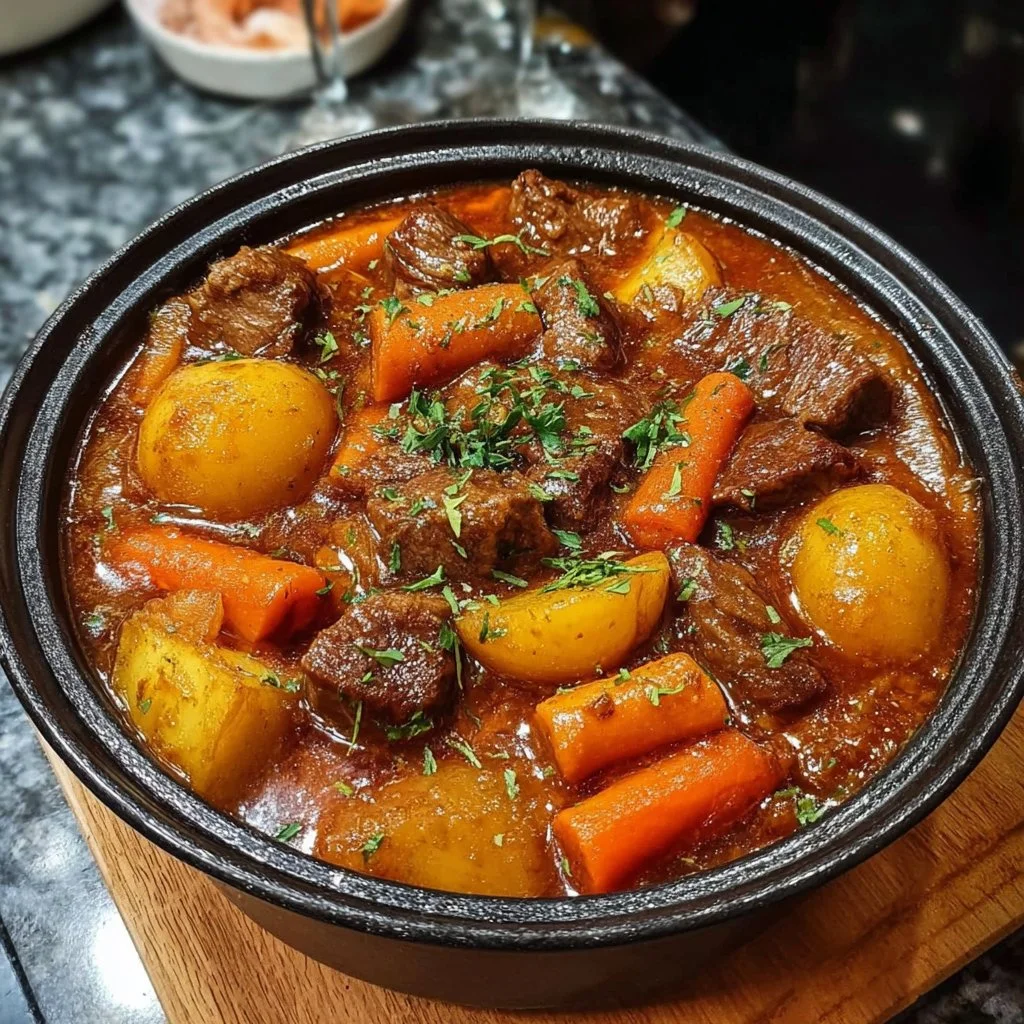
Beef Stew

Beef stew is one of those comforting meals that warms your soul while filling your kitchen with a delightful aroma. There’s something inherently satisfying about slowly cooking beef until it’s tender and flavorful, surrounded by hearty vegetables and a rich broth. This recipe encapsulates the essence of classic home cooking, perfect for chilly evenings or family gatherings.
The beauty of beef stew lies in its simplicity and versatility. You can easily adjust the ingredients to suit your taste or what you have on hand. The combination of tender beef, vibrant vegetables, and aromatic herbs creates a harmony of flavors that is hard to resist. Once everything is simmered together, you’re rewarded with a hearty dish that can be enjoyed as a standalone meal or served alongside crusty bread for mopping up the delicious broth.
Why make this recipe
Making beef stew is not only about the final dish but also the process. It invites you to slow down and engage with your cooking. Browning the beef to create depth of flavor, cooking the vegetables to unlock their natural sweetness, and letting everything simmer together allow the flavors to meld beautifully. This method also provides an opportunity for creativity—feel free to experiment with your favorite vegetables or spices. Plus, making a big pot of stew means you’ll have leftovers to savor over the next few days, making it as economical as it is satisfying.
This recipe also shines when you consider its nutritional aspects. Packed with protein from the beef and vitamins from the vegetables, it makes for a wholesome meal. Each serving boasts a balance of nutrients, delivering not just flavor but health benefits too. For those who love a good home-cooked meal but may be intimidated by more complex recipes, beef stew offers a straightforward approach that yields impressive results with minimal effort.
How to make Beef Stew
To start your beef stew, the first step involves choosing the right cut of beef. Chuck roast or round steak are excellent options due to their flavor and ability to become tender when cooked slowly. Once your beef is selected, you will want to cut it into bite-sized pieces, ensuring even cooking. The next ingredient is to sear the beef in a hot pot with vegetable oil. This step is crucial as browning the meat caramelizes the surface, adding depth and complexity to the overall flavor of the stew.
As the beef browns, aromatic ingredients like onions and garlic come into play. Sautéing these with the beef increases the dish’s savory profile. Once the onions are soft and translucent, it’s time to introduce the vegetables, such as carrots and potatoes, which will not only enhance the flavor but also provide a satisfying texture. Pouring in beef broth is essential as it forms the base of your stew, giving it richness and body. Seasoning the broth with herbs like thyme and garlic powder elevates the dish, creating a delightful aroma that fills your home.
Allowing the stew to come to a boil before reducing the heat is key in achieving tender beef. The long simmering process allows the connective tissue to break down, resulting in melt-in-your-mouth beef. This stew is not just a meal; it’s a ritual that connects you to the traditions of home cooking. After about 1.5 to 2 hours, your kitchen will fill with the mouthwatering scent of a robust dish, ready to serve.
Ingredients
- 1 lb beef chunks
- 2 carrots, chopped
- 2 potatoes, peeled and chopped
- 1 onion, diced
- 3 cups beef broth
- 2 tablespoons vegetable oil
- 1 teaspoon garlic powder
- 1 teaspoon thyme
- Salt and pepper to taste
Directions
- Heat vegetable oil in a pot over medium heat.
- Add the beef chunks, season with salt and pepper, and brown on all sides.
- Add the onion and cook until translucent.
- Stir in carrots and potatoes.
- Pour in the beef broth and add garlic powder and thyme.
- Bring to a boil, then reduce heat and simmer for 1.5 to 2 hours, until meat is tender.
- Serve hot.
Time Breakdown
• Preparation Time: 15 minutes
• Cooking Time: 2 hours
• Total Time: 2 hours 15 minutes
• Servings: 4
How to serve Beef Stew
Serving beef stew can be as simple or as refined as you wish. For a casual dinner, ladle generous portions into deep bowls and serve alongside crusty bread or rolls, allowing everyone to soak up the rich, flavorful broth. Alternatively, you might choose to elevate the presentation by garnishing each bowl with freshly chopped parsley for a pop of color. A side salad featuring fresh greens can also complement the stew beautifully, providing a refreshing contrast to the richness of the main dish.
For meal prep enthusiasts, beef stew is perfect for batch cooking. Freeze individual portions in airtight containers so you can enjoy a homemade meal on busy days. When reheated, the flavors continue to develop, often making the stew taste even better. If you’re feeling particularly indulgent, consider serving a dollop of sour cream or a sprinkle of cheese on top for a creamy finish.
How to store Beef Stew
To keep your beef stew fresh, allow it to cool completely before storing. Place it in a sealed container and refrigerate if you plan to eat it within a few days. Properly stored, it can last in the fridge for up to four days. If you want to keep it for longer, consider freezing the stew in a freezer-safe container. It can last for up to three months in the freezer. When you’re ready to enjoy it again, simply thaw it overnight in the refrigerator and reheat on the stove or in the microwave until piping hot.
Reheating frozen beef stew might result in slight changes in texture, particularly in the vegetables, but the flavors will still remain robust. Always ensure that it reaches a minimum internal temperature of 165°F (74°C) for safe consumption.
Tips to make Beef Stew
To get the most flavor from your beef stew, consider marinating the meat ahead of time. A simple marinade of red wine and herbs can infuse the beef with deeper flavors. Additionally, searing the beef in batches rather than crowding the pot ensures that each piece is browned evenly, resulting in a richer taste. For a thick, hearty stew, you can create a slurry with cornstarch and water towards the end of cooking. This will give the broth a luscious, velvety texture.
Using homemade beef broth will significantly enhance the flavor of your stew. If store-bought is your only option, try to select low-sodium options so you can better control the seasoning. Fresh herbs, when added towards the end of cooking, will brighten the flavor, so don’t hesitate to experiment with thyme, rosemary, or bay leaves for added dimension.
Variation
No major variations, but you can adjust seasonings to taste.
Nutritional Information (Per Serving)
• Calories: 350 kcal
• Protein: 29 g
• Carbohydrates: 30 g
• Fat: 13 g
• Fiber: 4 g
• Sugar: 3 g
• Sodium: 600 mg
FAQs
Q: Can I use other meats instead of beef?
A: Yes, you can substitute beef with lamb or even chicken, adjusting the cooking time as necessary.
Q: Is it necessary to brown the meat?
A: While not strictly necessary, browning the meat adds depth of flavor to your stew.
Q: How can I thicken my beef stew further?
A: You can blend a portion of the vegetables and return them to the stew or use a cornstarch slurry for thickening.
Beef Stew
Ingredients
Beef and Broth Ingredients
- 1 lb beef chunks Chuck roast or round steak works best.
- 3 cups beef broth Homemade broth enhances the flavor.
- 2 tablespoons vegetable oil Used for browning the beef.
- 1 teaspoon garlic powder
- 1 teaspoon thyme Fresh herbs can be added later for brightness.
- to taste Salt and pepper Adjust based on preference.
Vegetable Ingredients
- 2 carrots, chopped
- 2 potatoes, peeled and chopped
- 1 onion, diced Cook until translucent.
Instructions
Preparation
- Cut the beef into bite-sized pieces for even cooking.
Browning the Beef
- Heat vegetable oil in a pot over medium heat.
- Add the beef chunks, season with salt and pepper, and brown on all sides.
Cooking the Vegetables
- Add the onion and cook until translucent.
- Stir in the chopped carrots and potatoes.
Simmering the Stew
- Pour in the beef broth and add garlic powder and thyme.
- Bring to a boil, then reduce heat and simmer for 1.5 to 2 hours, until meat is tender.
Serving
- Serve hot in bowls, ideally with crusty bread for mopping up the broth.