
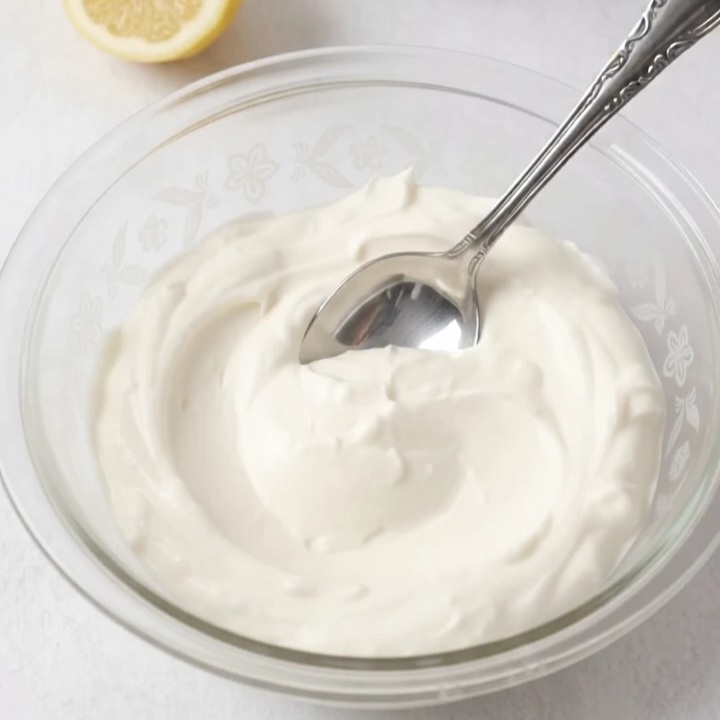
This homemade cream cheese turns whole milk, lemon juice or vinegar, and a little salt into a creamy, gently tangy spread. Heating the milk with acid separates it into soft white curds and yellowish whey. After draining, a few minutes in the food processor bring those curds together into a smooth spread that firms up in the refrigerator.
It’s a satisfying kitchen project for anyone who enjoys making everyday ingredients from scratch. Spread it on breakfast toast, serve it with crackers, or add chives for a savory bagel topping. Expect a fresh cheese with its own character: the texture can differ from packaged cream cheese, particularly in baking.
Why You’ll Love This Recipe
- Simple ingredients: Whole milk, lemon juice or vinegar, and salt form the base.
- No cheese cultures or rennet needed: The acid separates the milk into curds and whey.
- Adjustable consistency: A little reserved whey or cream helps smooth the mixture during blending.
- Season to taste: Start with ¼ teaspoon salt and adjust within the recipe’s range.
- Small-batch yield: Makes about 1 cup of fresh cheese.
- Easy savory options: Chives or garlic powder turn the plain cheese into a flavored spread.
Equipment
- Heavy-bottomed saucepan
- Spoon or heatproof spatula
- Fine-mesh sieve
- Cheesecloth
- Large heatproof bowl
- Measuring cups and spoons
- Food processor
- Clean container with a lid
Ingredients
Have the lined sieve ready before heating the milk so you can drain the curds as soon as they separate.
- 4 cups whole milk (32 fl oz / approximately 950 ml)
- 2–3 tablespoons fresh lemon juice or white vinegar
- ¼ teaspoon salt, plus more to taste, up to ½ teaspoon
- A little reserved whey or cream, if needed for blending
Ingredient Notes & Substitutions
Whole milk: Full-fat milk provides the richness called for in this recipe. Lower-fat milk may produce a less rich result, so whole milk is the best match for the intended texture.
Lemon juice or white vinegar: Either acid can be used as specified. If choosing lemon juice, use freshly squeezed juice. Add the acid gradually and watch for distinct curds rather than automatically adding all 3 tablespoons.
Salt: Begin with ¼ teaspoon after blending. Taste before adding more, keeping the total at or below ½ teaspoon.
Reserved whey or cream: These are optional texture adjustments. Whey is the liquid collected beneath the sieve; reserving a little lets you loosen the curds without adding another ingredient. Cream adds richness. Use either in small increments to avoid making the spread too loose.
How to Make Homemade Cream Cheese
- Prepare the straining setup. Line a sieve with cheesecloth and set it over a large heatproof bowl. Make sure the bowl has enough room to collect the whey.
- Heat the milk. Pour the whole milk into a heavy-bottomed saucepan. Heat over medium-high heat, stirring frequently and scraping the bottom, until it reaches a strong simmer.
- Add the acid gradually. Reduce the heat to medium. Stir in 1 tablespoon of lemon juice or white vinegar, then wait about 1 minute before adding the next tablespoon. Add the third tablespoon only if needed. Stir gently until distinct white curds separate from the yellowish whey.
- Drain and cool. Remove the saucepan from the heat. Carefully pour the mixture into the cheesecloth-lined sieve and let it drain and cool for about 15 minutes.
- Gently squeeze the curds. Once cool enough to handle, gather the cheesecloth and gently squeeze out excess whey. Leave some moisture in the curds and reserve a little whey for blending.
- Blend until smooth. Transfer the curds to a food processor. Blend for about 3 minutes, stopping to scrape down the sides. If the mixture is stiff or grainy, add reserved whey or cream 1 teaspoon at a time, continuing to blend until smooth.
- Season and refrigerate. Blend in ¼ teaspoon salt. Taste and add more if desired, up to ½ teaspoon total. Transfer to a clean, covered container and refrigerate. The cheese will firm up as it chills.
Tips for Success
- Use a heavy-bottomed saucepan. It helps distribute heat while you stir and scrape the milk from the bottom.
- Watch the milk closely. Milk can rise quickly as it approaches a strong simmer.
- Let each acid addition work. Wait about a minute between tablespoons rather than pouring in the full amount at once.
- Look for clear separation. Distinct white curds and yellowish whey are the cues to stop cooking and drain.
- Keep some moisture in the curds. Squeezing them completely dry makes smooth blending more difficult.
- Adjust liquid gradually. Add whey or cream by the teaspoon, blending between additions.
- Allow for chilling. The freshly blended cheese will be softer than the refrigerated spread, so avoid adding too much liquid while it is still warm.
Variations
These optional versions build on the finished plain cheese.
- Chive cream cheese: Stir in finely chopped chives for a savory breakfast spread.
- Garlic cream cheese: Mix in a small pinch of garlic powder, then taste before adding more.
- Garlic and chive spread: Combine both suggested seasonings for a spread to serve with bagels or crackers.
How to Store
Transfer the cheese to a clean, covered container and keep it refrigerated. Use a clean utensil each time you serve it.
Refrigerator storage duration: [Not provided]. This is a fresh homemade cheese; do not assume it has the same shelf life as an unopened package of commercial cream cheese.
Freezing: A tested freezing duration and thawing method were not provided for this recipe. Refrigeration is the specified storage method.
Serving Suggestions
- Spread on toasted bagels or breakfast toast.
- Serve with crackers for a simple snack.
- Use the chive or garlic version as a sandwich spread.
- Add a small bowl to a brunch platter alongside bread and fresh vegetables.
For baking, keep in mind that this fresh cheese may behave differently from packaged cream cheese. Recipes that depend on the firmness of block cream cheese may not give the same results.
Frequently Asked Questions
Is homemade cream cheese exactly like store-bought cream cheese?
No. This method makes an acid-set fresh cheese that is blended into a creamy spread. Its moisture, texture, and performance in baking can differ from commercial cream cheese.
Can I use white vinegar instead of lemon juice?
Yes. Use the same 2–3 tablespoon range, adding it gradually and stopping when the curds separate clearly from the whey.
Why hasn’t my milk separated?
Make sure the milk has reached the strong simmer described in the recipe before reducing the heat and adding acid. Allow about a minute between additions, and use the third tablespoon if needed.
Why is my cheese grainy?
The curds may need more blending or a little more moisture. Scrape down the food processor, then add reserved whey or cream 1 teaspoon at a time and blend until smoother.
Can I use this in cheesecake or frosting?
The supplied recipe notes that baking results may differ from those made with packaged cream cheese. Treat it primarily as a fresh spread rather than assuming it is a direct substitute in recipes that need a specific firmness.
How much does this recipe make?
The stated yield is about 1 cup. The amount can vary with how much whey you drain and whether you add liquid during blending.
Recipe Card
Easy Homemade Cream Cheese
Equipment
- Heavy-bottomed saucepan
- Spoon or heatproof spatula
- Fine-mesh sieve
- Cheesecloth
- Large heatproof bowl
- Measuring cups and spoons
- Food processor
- Clean covered container
Ingredients
- 4 cups whole milk 32 fl oz / approximately 950 ml
- 2 –3 tablespoons fresh lemon juice or white vinegar
- ¼ teaspoon salt plus more to taste, up to ½ teaspoon
- A little reserved whey or cream if needed for blending
Instructions
- Set a cheesecloth-lined sieve over a large heatproof bowl.
- Heat the milk in a heavy-bottomed saucepan over medium-high heat, stirring frequently and scraping the bottom, until it reaches a strong simmer.
- Reduce to medium heat. Add the lemon juice or vinegar 1 tablespoon at a time, waiting about 1 minute between additions. Use the third tablespoon if needed, stirring gently until white curds separate from yellowish whey.
- Remove from the heat and carefully pour into the lined sieve. Drain and cool for about 15 minutes.
- Once cool enough to handle, gather the cheesecloth and gently squeeze out excess whey without drying the curds completely. Reserve some whey.
- Blend the curds in a food processor for about 3 minutes, scraping down the sides. If needed, add reserved whey or cream 1 teaspoon at a time and continue blending until smooth.
- Blend in ¼ teaspoon salt, adding more to taste up to ½ teaspoon total. Transfer to a clean, covered container and refrigerate until firmer.
Optional flavoring
- Stir in finely chopped chives or a small pinch of garlic powder.