Honeycomb

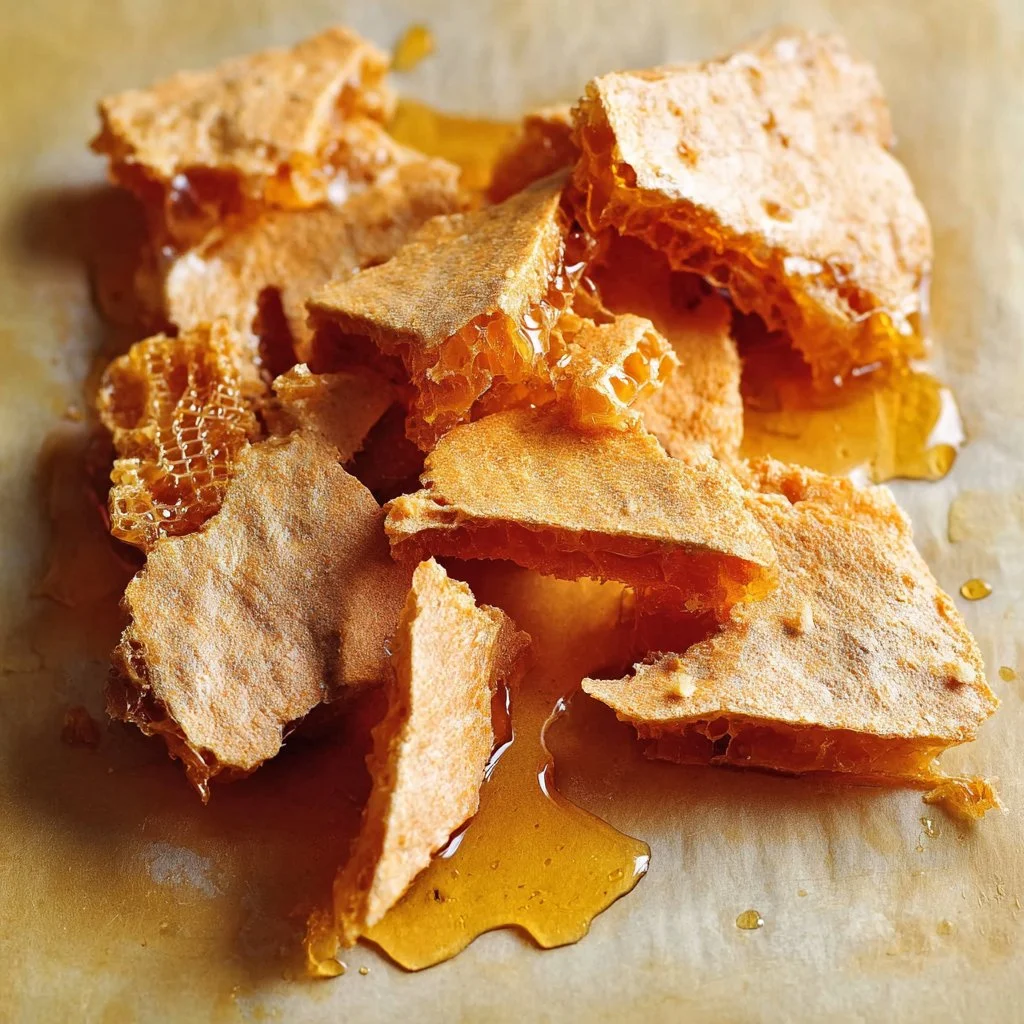
Honeycomb is a delightful treat that brings a sense of nostalgia and whimsy to the world of confectionery. With its airy texture and golden hue, this sugary creation not only looks impressive but also offers a delightful crunch that stands out in any dessert platter or as a standalone snack. It’s a quick and simple recipe, making it an excellent choice for both novice and experienced cooks who want to try their hand at candy-making.
This recipe for honeycomb requires just a few ingredients and minimal equipment, making it a perfect project for an afternoon in the kitchen. The blend of sugar and golden syrup creates a smooth, sweet base, which, when combined with bicarbonate of soda, results in that characteristic bubbly texture. Whether you’re planning to enjoy it on its own, use it as a decoration for cakes, or incorporate it into other desserts, making your own honeycomb from scratch is immensely satisfying and a true testament to classic candy-making.
Why make this recipe
Making honeycomb is not only about indulging in a sweet treat; it is also about the joy of crafting something unique with your own hands. The transformation from a viscous syrup into a light, airy candy is magical. Children and adults alike marvel at this process, providing an excellent opportunity for family bonding over a fun and engaging activity in the kitchen. Beyond its impressive appearance, honeycomb offers a delightful contrast of textures—crunchy on the outside yet airy within. This balance can elevate any dessert or serve as a charming snack.
Moreover, homemade honeycomb allows you to control the ingredients, ensuring a purer and fresher result compared to many store-bought options that may contain additives or preservatives. Crafting candy in your kitchen can be a rewarding challenge that hones your cooking skills and inspires further culinary adventures, whether they involve exploring other confections or baking alongside this honeycomb delight.
How to make Honeycomb
To begin making honeycomb, it’s essential to prepare your workspace and gather all necessary materials. The first step is to line a baking tin with nonstick paper, ensuring that the honeycomb can be easily removed once it has set. The amalgamation of golden syrup and caster sugar in a saucepan over low heat is crucial. As you stir, you create a syrupy mixture that will eventually bubble and transform. The most critical part of this process is to stop stirring once the sugar has dissolved to prevent crystallization, which could ruin the texture of your honeycomb.
Once the mixture comes to a simmer, the heat is increased to medium, allowing it to bubble down for a precise period of five minutes. This caramelization stage is where your candy’s flavor deepens, turning a beautiful amber color and reaching the desired temperature of 150°C / 302°F on a sugar thermometer. Monitoring the temperature is vital, as overcooking can result in hard, bitter candy that may not have the delightful texture you’re aiming for. After carefully turning off the heat, adding the bicarbonate of soda will create the signature foam that gives honeycomb its light and airy structure.
Once whisked into the syrup, the reaction occurs rapidly, so you must act quickly to pour the frothy mixture into your prepared tin. Allow it to cool undisturbed for one to two hours, which will let the honeycomb set properly. Breaking the solidified candy into pieces afterward reveals the characteristic honeycomb texture with its unique, bubbly interior. Storing your honeycomb in an airtight container will keep its crunchy texture for several days, allowing you to enjoy this treat whenever the craving strikes.
Ingredients
- 5 tbsp golden syrup
- 200 g (1 cup) caster/superfine sugar
- 2 tsp bicarbonate of soda (baking soda)
Directions
- Line a 20 × 25 cm (8 × 10 in) baking tin with nonstick baking paper.
- Add golden syrup and sugar to a large saucepan over low heat. Stir with a balloon whisk until the sugar dissolves, then stop stirring (to prevent crystallizing).
- Increase heat to medium and let the mixture bubble for about 5 minutes, until deep amber and it reaches 150°C / 302°F on a sugar thermometer. Don’t overcook.
- Turn off the heat and quickly whisk in the bicarbonate of soda until the mixture foams up and becomes light and frothy. Don’t over-mix.
- Pour into the prepared tin and leave to cool for 1–2 hours until set.
- Remove from the tin and break into about 32 pieces. Store in an airtight container at room temperature for up to 5 days.
Time Breakdown
• Preparation Time: 10 minutes
• Cooking Time: 5 minutes
• Total Time: 1–2 hours until set
• Servings: Approximately 32 pieces
How to serve Honeycomb
Honeycomb can be served in many delightful ways, making it a versatile addition to a variety of meals and snacks. On its own, honeycomb can be a stand-alone treat, enjoyed as a sweet snack that satisfies a sugar craving with its delightful crunch. It can also be added to dessert platters, offering a visually striking contrast against fruit, cakes, and other confections. Crumbling honeycomb over ice cream or yogurt adds an exotic twist to your favorite cold desserts, while using it as a topping for cakes brings a festive touch to your baking endeavors.
For a more sophisticated presentation, consider dipping pieces of honeycomb in dark or milk chocolate, creating an indulgent treat that complements the sweet crunchiness of the candy. This combination amplifies flavors and elevates the overall experience, making it worthy of any gathering or celebration. The unique texture of honeycomb can also inspire creativity in your baking, allowing you to incorporate it into cookies, cakes, and mousses, imbuing dishes with a delicate sweetness and airy texture.
How to store Honeycomb
Storing honeycomb correctly is critical to maintaining its signature crunchiness and preventing it from becoming chewy or sticky. Once you have prepared the honeycomb and allowed it to cool and set, transfer it to an airtight container. Ensure that the container is kept at room temperature, as refrigeration can introduce moisture that compromises the texture of the candy. Under ideal conditions, your honeycomb can last for up to five days, but over time, it may start to absorb moisture from the air, leading to less desirable qualities.
If you anticipate longer storage, consider wrapping individual pieces in parchment or wax paper before placing them in the airtight container. This added layer of protection can help prolong the candy’s shelf life while keeping it fresher for more extended periods. Avoid placing it in direct sunlight or near heat sources, as these conditions can degrade its structure and flavor.
Tips to make Honeycomb
To achieve the best results when making honeycomb, timing and temperature control are paramount. Use a reliable sugar thermometer to ensure accuracy as you cook the sugar syrup; this tool is indispensable for making sure you’re reaching the ideal temperature before introducing the bicarbonate of soda. Avoid stirring the mixture while it is bubbling, as doing so can interfere with the caramelization process and lead to undesirable textural outcomes.
Another handy tip is to prepare your tin before starting the cooking process. This efficiency not only saves time but also allows you to pour the bubbling mixture into the tin without delay. Be prepared for the foaming reaction once you add the bicarbonate of soda—it occurs quickly and can bubble up quite a bit, so ensure your saucepan has enough space to accommodate this expansion. Lastly, if you are uncertain about your finished product’s consistency, the best test is visual. You want the honeycomb to have a distinct, bubbly appearance that is light and airy, and not too hard or brittle.
Variation
No major variations, but you can adjust seasonings to taste.
Nutritional Information (Per Serving)
• Calories: 90 kcal
• Protein: 0 g
• Carbohydrates: 23 g
• Fat: 0 g
• Fiber: 0 g
• Sugar: 22 g
• Sodium: 1 mg
FAQs
Q: Can I make this recipe without a sugar thermometer?
A: While using a thermometer is recommended for accuracy, you can test the syrup by using the cold water test to check for the hard crack stage.
Q: Why did my honeycomb not set properly?
A: Honeycomb may not set correctly if the temperature is not high enough during cooking or if it is stirred too much, which can cause crystallization.
Q: How can I make honeycomb less sweet?
A: While the principal flavors of honeycomb come from sugar and syrup, you could experiment by reducing the sugar slightly; however, this will affect the final texture and structure.
Honeycomb
Ingredients
Main ingredients
- 5 tbsp golden syrup
- 200 g caster/superfine sugar
- 2 tsp bicarbonate of soda (baking soda)
Instructions
Preparation
- Line a 20 × 25 cm (8 × 10 in) baking tin with nonstick baking paper.
- Add golden syrup and sugar to a large saucepan over low heat. Stir with a balloon whisk until the sugar dissolves, then stop stirring to prevent crystallizing.
Cooking
- Increase heat to medium and let the mixture bubble for about 5 minutes, until deep amber and it reaches 150°C / 302°F on a sugar thermometer. Don’t overcook.
- Turn off the heat and quickly whisk in the bicarbonate of soda until the mixture foams up and becomes light and frothy. Don’t over-mix.
- Pour into the prepared tin and leave to cool for 1–2 hours until set.
Final Steps
- Remove from the tin and break into about 32 pieces. Store in an airtight container at room temperature for up to 5 days.